Forensic services represent a comprehensive set of procedures aimed at identifying corporate fraud, employee misconduct, and corruption within a company. Forensic specialists conduct investigations to identify employees who engage in fraudulent activities, are involved in corruption, or inflict damage on the company through other illegal actions.
Forensic (forensic accounting) is becoming an important interdisciplinary field at the intersection of law, accounting and audit, statistics, psychology, management, human resources, sociology, and forensic bookkeeping, and is understood as financial investigation.
Forensic is a relatively new concept for business. It consists of a set of actions designed to detect and prevent cases of corporate fraud. A forensic investigation includes financial, legal, informational, and even psychological methods.
A related term — forensics — is also used in criminalistics, where it refers to uncovering computer crimes and studying digital evidence, including methods for locating and using such evidence.
To conduct a comprehensive assessment of suspicious processes, forensic specialists are engaged. Independent experts identify the strengths and weaknesses of a business, help find ways out of crises, assess the risks of financial losses, and uncover illegal actions by employees, enabling the company to hold them accountable and recover damages.
During operational and financial activities, organizations frequently encounter employee misconduct, fraud, manipulation, and associated risks, all of which negatively affect financial performance. Standard audit methods are often insufficient to detect fraud because fraudulent schemes are typically well-planned and accompanied by sophisticated concealment techniques.
The functioning of any organization involves many nuances depending on the nature of its operations, such as its legal structure, international economic connections, product or service characteristics, organizational structure, and internal relationships. In the absence of strong internal control, these factors may create fertile ground for fraudulent activities, violations of financial regulations, and other legal breaches, enabling employees to manipulate financial records and reporting.
Therefore, companies must take targeted measures to identify internal fraud and detect or prevent financial crimes committed by external counterparties. In addition to standard audit methods, management must employ specialized audit techniques, financial monitoring, and internal investigations.
In today’s market environment, forensic accounting has become especially important as it integrates law, accounting, audit, statistics, psychology, management, sociology, and forensic bookkeeping into a single discipline focused on financial investigation.
In Western countries, forensic services have existed for many years.
Researchers studying forensic issues note that the concept began forming as early as the 19th century. There is no single accepted definition of forensic services. Some experts believe that the first reference appeared in the writings of 19th-century Spanish author and politician P.A. Alarcón. Others point to Canadian judicial experts who in 1817 used the phrase “forensic accounting examination,” meaning “judicial accounting expertise.” However, most researchers credit Maurice E. Peloubet, a prominent American scholar, with introducing and popularizing the term “forensic” in the accounting profession.

Today, the global forensic services market is largely shaped by four major companies: KPMG, PwC, Deloitte, and Ernst & Young.
In 2020, PricewaterhouseCoopers published the Global Economic Crime and Fraud Survey based on data from 2018–2019. According to this report, economic crimes caused USD 42 billion in losses over two years. The findings were based on responses from more than 5,000 participants across 99 countries.
47% of large international companies reported that they had detected multiple cases of fraud and economic crime in the past two years.
The most common types of fraud were:
– Client-related fraud — 35%
– Cybercrime — 34%
– Misappropriation of assets — 31%
– Bribery and corruption — 30%
To prevent fraud and material loss, many companies increasingly rely on digital technologies, including artificial intelligence. Despite the additional cost, 45% of companies that implemented modern technologies reported positive results.
The survey identified the five most damaging types of fraud in terms of financial loss:
– Antitrust violations
– Insider trading
– Tax fraud
– Money laundering
– Bribery and corruption

The most typical violations found during forensic examinations include:
– Fraud committed by counterparties
– Procurement-related manipulation
– Non-compliance with accounting standards
– Unusual accounting procedures
– “Abnormal” payments
– Potentially suspicious expenses
– Unusual or risky employee actions
– Rarely used suppliers
– Irregular amounts, unusual analytics, improper accounting periods, and transactions with atypical counterparties
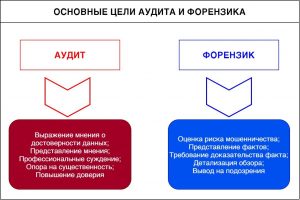
Formal indicators of potential fraud include inconsistencies between financial indicators and expected business behavior, for example:
– Increased sales should be accompanied by growth in accounts receivable, inventory, and shipping volume
– When profits rise, cash balances should also increase
– Higher production volumes should reduce unit costs
– Increased inventory should correspond to available warehouse capacity
– Rising sales should correlate with proportional expense growth
– Overdue receivables may indicate not only late payments but also possible misappropriation
Situations that typically require forensic services include:
– Signs of asset or financial leakage
– A new executive assessing risks left by previous management
– Obtaining a positive assessment before leaving a position
– Founder or shareholder distrust
– Evaluating the risk of financial losses
– Establishing the fact of a crime and prosecuting guilty parties
– Recovering lost financial resources
After conducting a forensic analysis, specialists provide the client with a confidential report outlining the problems, risk zones, arguments, and recommendations.
This enables management to understand the real state of affairs, take preventive measures, and avoid negative consequences — including potential issues during regulatory audits.
Standard operational audit methods are not sufficient to detect fraud, as fraudulent schemes are typically well-concealed and deliberate.

In summary, due to the COVID-19 pandemic, many organizations experienced significant losses in 2020. Restoring financial stability in conditions of high financial risk and accelerated digital transformation has become increasingly difficult. Digitalization has also heightened the risk of cybercrime and financial fraud. Thus, the forensic services market is actively forming, and demand for such services continues to grow every year.
Independent experts — forensic specialists — help identify the strengths and weaknesses of a business, assess the risks of financial losses, uncover unlawful activities, and hold those responsible accountable while ensuring compensation for damages.